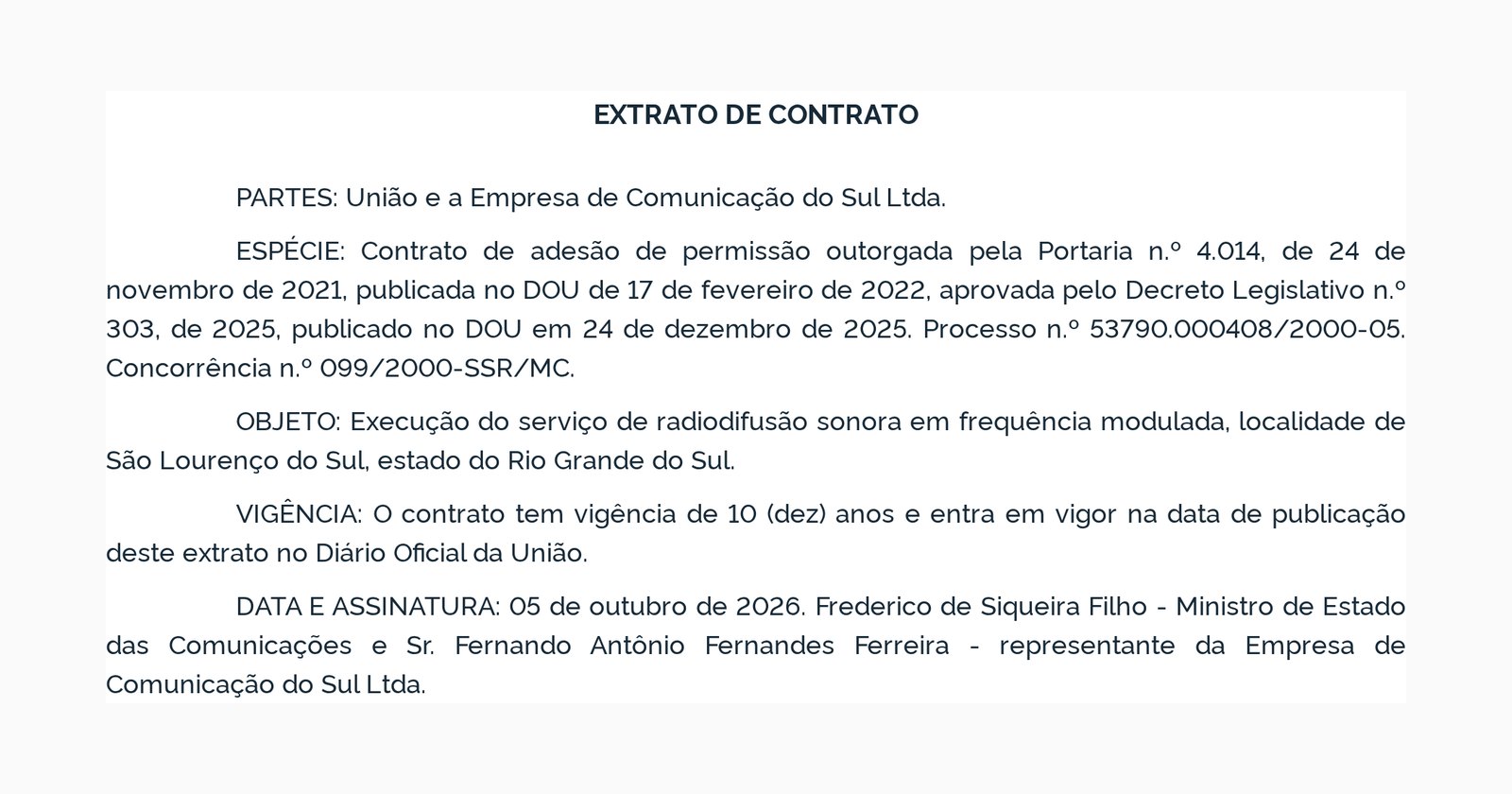
São Lourenço do Sul, a town in Rio Grande do Sul, Brazil's southernmost state, is getting a new FM station. On October 27, 2026, Brazil's Ministry of Communications announced that Empresa de Comunicação do Sul Ltda. now holds a ten-year permit to broadcast on FM, reaching "more than 42,000 residents of the region" by the ministry's own count. The contract summary ran in the Diário Oficial da União, Brazil's federal gazette, on October 6, a day after signing.
The ministry's press note skips the best part, which sits in the middle of that gazette entry: "Processo n.º 53790.000408/2000-05. Concorrência n.º 099/2000-SSR/MC". The tender for this frequency dates from 2000. From case file to contract took 26 years, and the station is still not on the air.
How long does it take to get an FM license in Brazil?
There is no official average. This one case, though, can be traced step by step, because every stage left an act in the gazette:
- 2000: the case file and Tender 099/2000 open at the Ministry of Communications.
- 2018: a technical note and a legal opinion from the ministry's counsel review the tender. That same year the company changed partners, and the change needed prior consent from Brazil's National Defense Council, which only came in July 2021.
- October 21, 2021: the minister ratifies the tender and awards the frequency.
- November 24, 2021: Ordinance 4,014 grants the permit. It was only published on February 17, 2022, 85 days later.
- December 12, 2022: the President's office sends the act to Congress (Message 651).
- December 23, 2025: Congress approves it through Legislative Decree 303. Three years and eleven days after the message.
- July 23, 2026: the company signs an installment plan for the license fee with the federal government.
- October 5 and 6, 2026: contract signed and published.
The documents give dates, not reasons. Nothing in them explains what happened to the tender between 2000 and 2018, or how much of the delay came from the government and how much from the company's own paperwork. Pinning it all on one side would be dishonest.
Congress had 45 days
Under Article 223 of Brazil's Constitution, a radio license has no legal effect until Congress votes on it, and Congress must review the act within the deadline of Article 64, counted from receipt of the President's message. That deadline is 45 days in the lower house plus 45 in the Senate, with recess excluded. I don't know the exact day the message reached Congress, so I won't pretend to fine-tune the math. Three years against a 90-day clock doesn't need a ruler.
The wait inside the executive branch can be long too. Message 651 carried, alongside São Lourenço do Sul, an ordinance from December 6, 2011, issued to the same company for the town of Itaara, also in Rio Grande do Sul. Eleven years just to leave the President's office.
A signed contract is not a station on the air
This is where readers of the headline go wrong if they expect to hear the new FM next month. The ministry itself warns, at the end of its note, that the station's launch "depends on authorization to use the radio frequency and on the issuing of the operating license", under the requirements of Anatel, Brazil's telecom regulator. Anatel issues frequency-use authorizations to broadcasters and inspects their stations.
Meanwhile, the clock is running. The contract is valid for ten years from its publication in the gazette, and that was October 6. Every month spent building the transmitter site, the tower and the studio comes out of that term.
What I'd do while waiting for an FM
I think anyone chasing a frequency today makes a mistake by treating FM as the start of their station. On this case's calendar, FM is the finish line of a very long race, and the station can start years earlier online, with the same name, the same schedule and the same morning host. When the license lands, the FM signs on to listeners who are already waiting, not to silence.
Some will push back: a web stream isn't real radio, and local advertisers pay for the dial. Fair, advertisers want the dial. That's exactly why it pays to walk in with measured audience and a known brand instead of asking for faith on day one.
In practice, if you're in Brazil or anywhere with a similar process:
- Track your case in the official gazette by company name. In Brazil, the Diário Oficial search turns up the ratification, ordinance, message, legislative decree, installment plan and contract. That's how this timeline was built.
- Ownership changes join the queue too. Here, an October 2018 change to the company's articles only got consent in July 2021. If you're competing for a license, think twice before reshuffling partners mid-process, and check the requirement with the regulator and your lawyer.
- Put the station online first. A stream, a web page and your own app in both stores need no broadcast license. That's where you learn whether your programming holds an audience.
- Have the engineering project moving on contract day. The ten-year term starts at publication, not when the transmitter switches on.
None of this is legal advice. It's what the published acts show. Confirm each step with Brazil's Ministry of Communications, Anatel and your own lawyer.
São Lourenço do Sul will get another FM. When it signs on now depends on Anatel and on the company's own build-out.
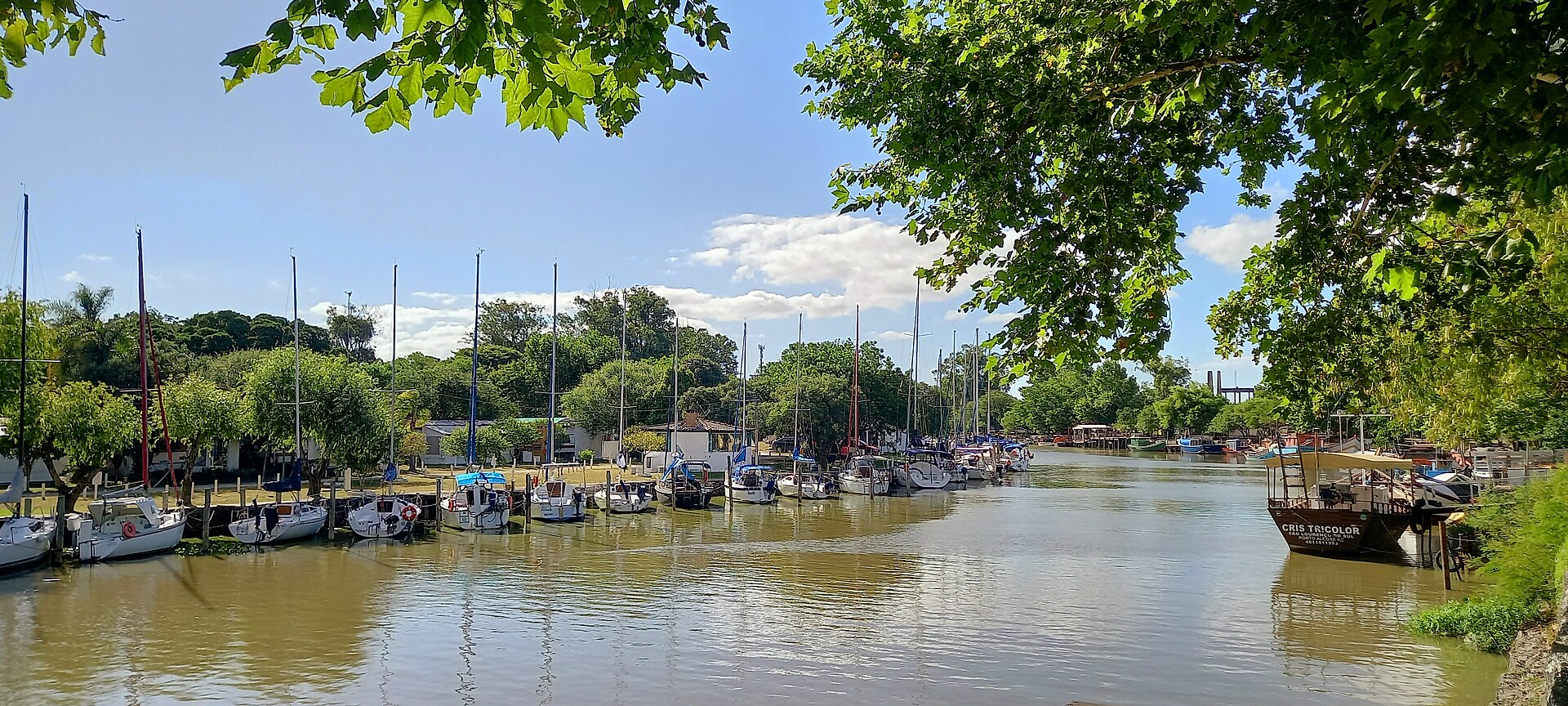
Cover photo: boats in São Lourenço do Sul, by Just a Brazilian man, via Wikimedia Commons (CC BY 2.0).
